Claude vs GPT vs Open Models: Choosing the Right LLM for Your Architecture
There's no single best model — there's a best model for your constraints. A practical framework for picking an LLM based on task, latency, cost, and data sensitivity.
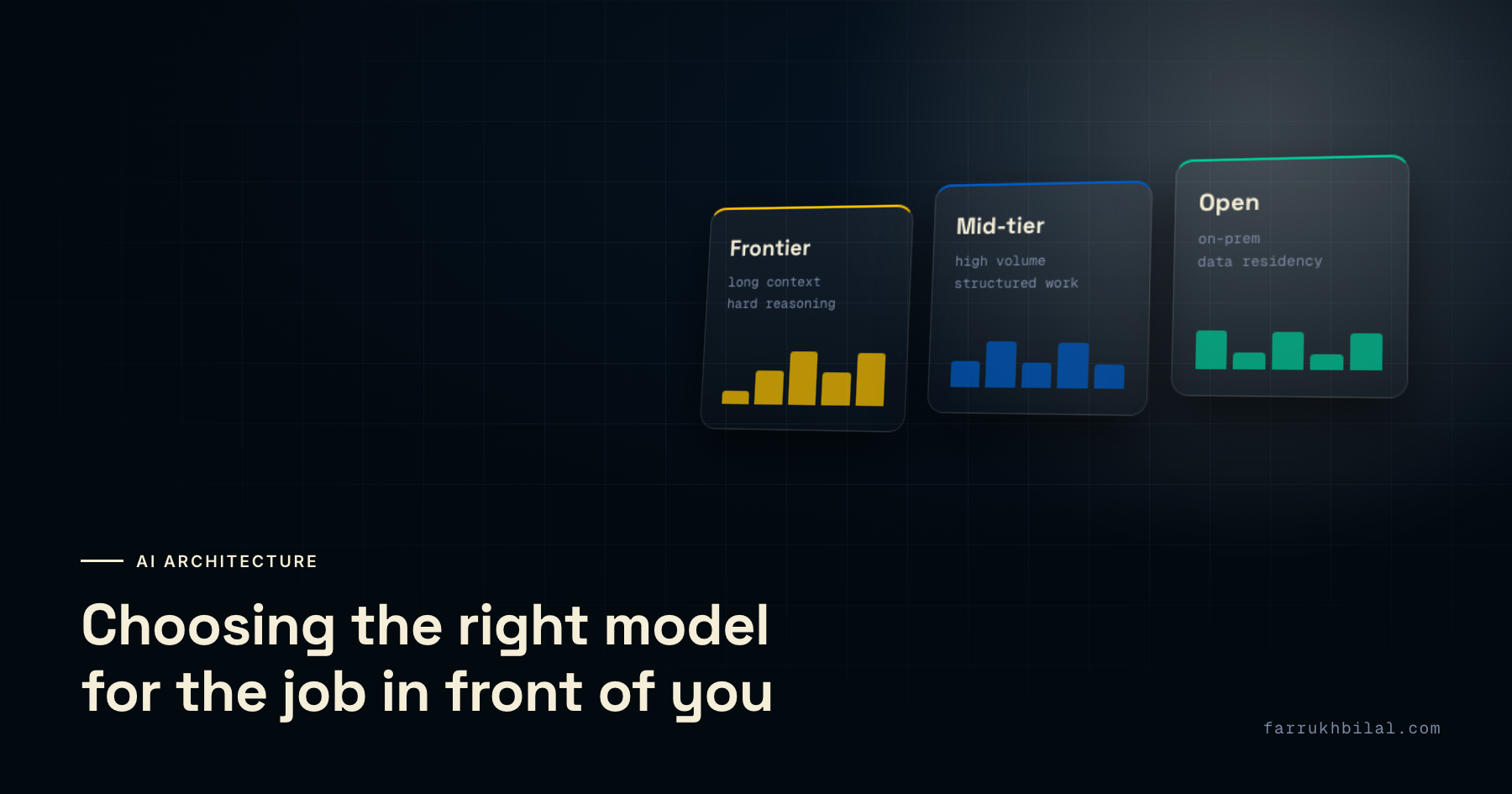
"Which LLM is best?" is the wrong question — it doesn't have a stable answer, and chasing the leaderboard is a distraction from the question that actually matters for an architecture: which model is best for this task, under these constraints. Here's the framework I use when a client asks.
Start with task complexity
Not every call in an AI system needs frontier-model reasoning. Classification, extraction, simple rewrites, and structured-output tasks are often handled well by smaller or mid-tier models at a fraction of the cost and latency. Reserve frontier-class models (the current Claude and GPT flagship tiers) for the calls that genuinely need multi-step reasoning, nuanced judgment, or complex tool use. Mixing tiers within one system — a router pattern — is usually the right architecture, not a single model for everything.
Latency budget
An interactive, user-facing feature has a very different latency tolerance than a background batch job. If a response needs to feel instant, that constrains you toward faster, often smaller, models — or toward streaming the output so perceived latency drops even if total generation time doesn't. A nightly analysis job has no such constraint and can afford the slower, more capable model.
Cost budget at your actual scale
Modeling cost at prototype volume and modeling cost at expected production volume are different exercises. A frontier model might be entirely affordable at ten requests a day and untenable at ten thousand. Do the arithmetic against real projected volume before committing an architecture to a specific model tier — and design for the router pattern above so the cost curve doesn't force a rewrite later.
Data sensitivity and self-hosting
Some workloads can't leave your infrastructure — regulatory constraints, client contracts, or simply the sensitivity of the data involved. That's the scenario where a self-hosted open model (via something like a local inference server) earns its complexity, even at a capability cost relative to the frontier hosted models. For everything else, that complexity is usually not worth taking on — hosted APIs from Anthropic or OpenAI are simpler to operate and improve on their own schedule.
Tool-use and structured-output quality
If your architecture leans on function calling, MCP tool use, or strict structured output (see the MCP piece above), test candidate models specifically on that — general capability benchmarks don't reliably predict how reliably a model follows a tool schema or stays within a structured-output contract. This is one of the areas where model choice has shown the most real variance in my own project work, more than raw reasoning benchmarks suggest.
Multi-model architectures are normal, not a compromise
The systems I build rarely use one model for everything. A typical shape: a cheap model for classification and routing, a mid-tier model for the bulk of extraction and generation work, and a frontier model reserved for the subset of requests that are genuinely hard. That's not cutting corners — it's matching cost and capability to the task, the same way you wouldn't run every database query against your most expensive compute tier by default.
Revisit the choice
Model capability, pricing, and context-window limits all shift fast enough that a choice made a year ago is worth re-checking, not treated as permanent. Build the model call behind an interface that makes swapping the underlying model a config change, not a rewrite — that one architectural decision has saved more re-engineering time on my projects than any single model choice has.
Related articles
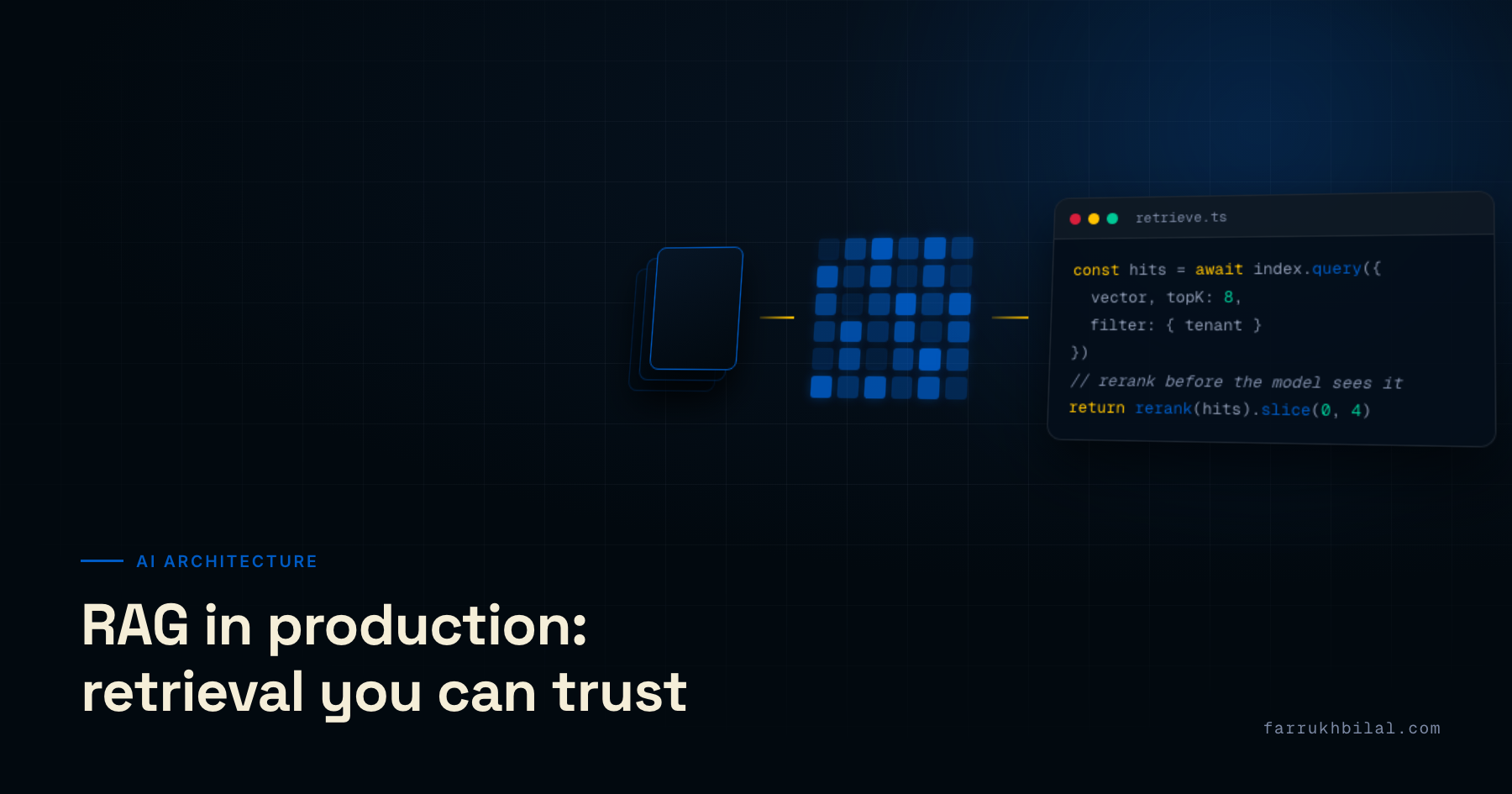
RAG in Production: Lessons from Building Document-Intelligence Pipelines
Retrieval-augmented generation looks simple in a tutorial. Here's what actually breaks when you put it in front of real documents and real users.
Jul 10, 2026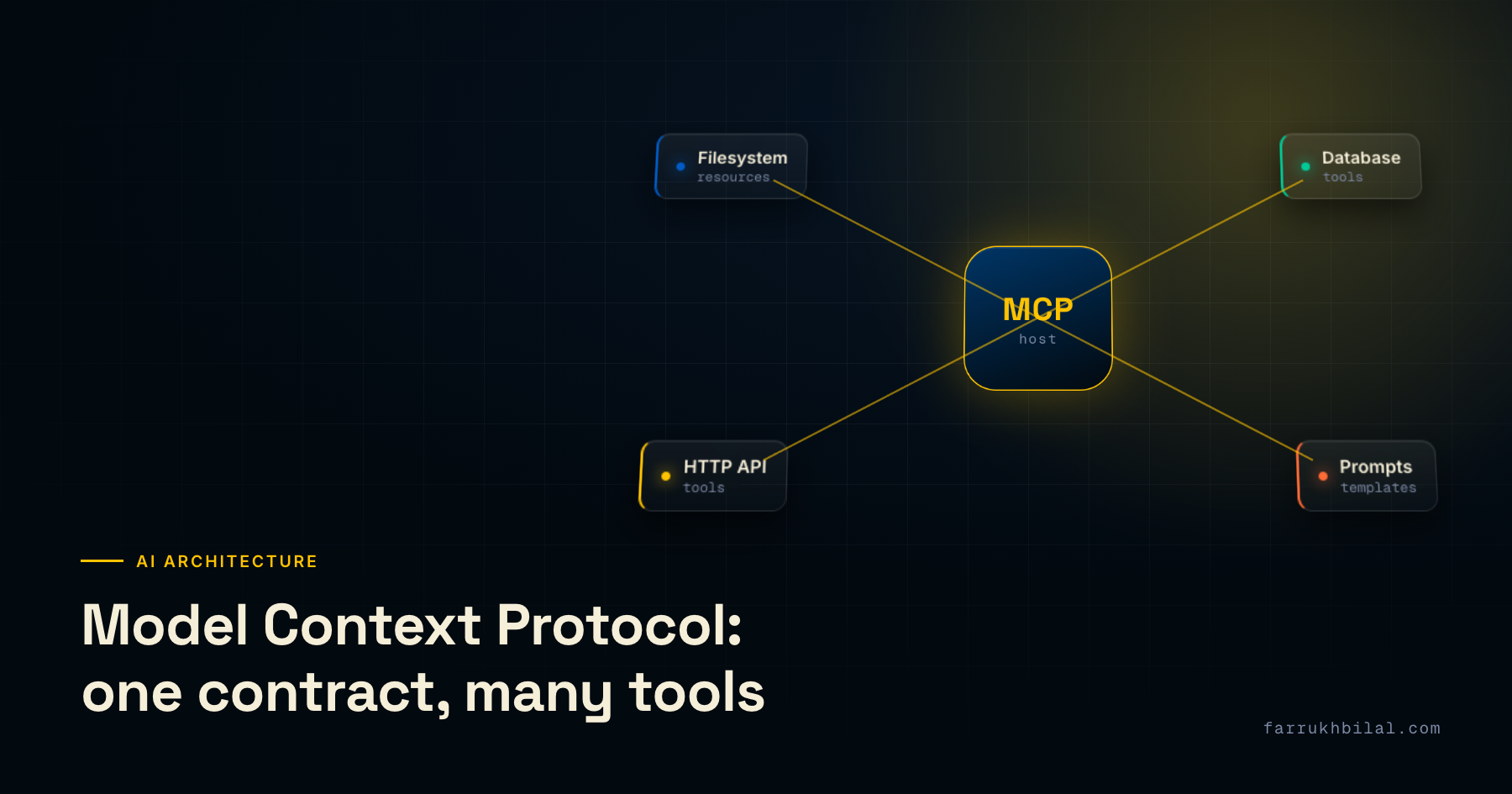
Model Context Protocol (MCP): The New Standard for Connecting AI to Your Tools
What MCP actually standardizes, why it matters for AI architecture, and how it changes the way LLMs connect to your APIs, databases, and internal tools.
Jun 22, 2026